JULY SALE IS LIVE ON BINGEON !

Evolution of Styles in Hip-Hop Jewellery
1980s–1990s: The Foundation Era
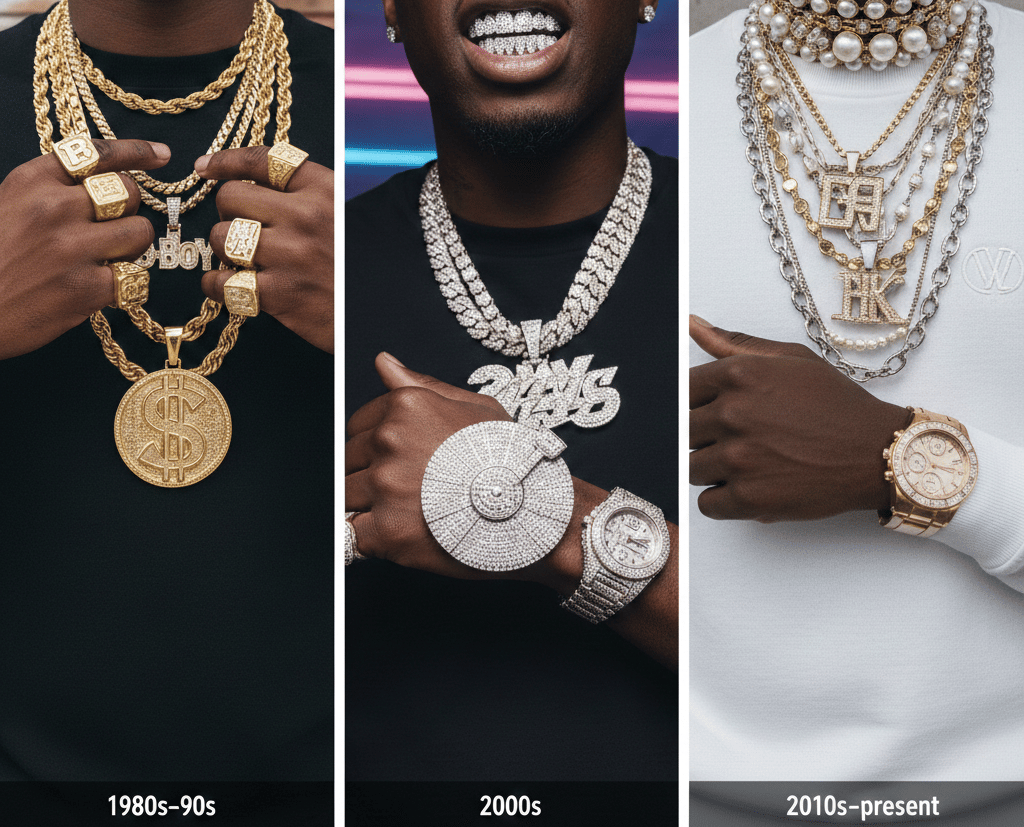
In the early decades of hip-hop, jewellery was bold, unmistakable, and symbolic. Thick gold chains, rope chains, oversized rings, and medallions dominated the scene. These pieces were not subtle by design. They represented success, authority, and visibility in environments where such recognition was often denied. Gold, in particular, became a visual language of achievement and respect.
2000s: The “Iced-Out” Era
The 2000s marked a shift toward excess and spectacle. Diamond-encrusted chains, rings, and watches—popularly referred to as “iced-out” jewellery—became central to hip-hop aesthetics. Grills emerged as a distinctive form of adornment, turning jewellery into a statement worn directly on the body. Watches evolved from functional timepieces into high-value status symbols. This era emphasized visibility, wealth, and dominance.
2010s–Present: Expression and Individuality
In recent years, hip-hop jewellery has become more diverse and expressive. Custom designs, mixed metals, pearls, and gender-fluid styles have gained acceptance. The focus has shifted from sheer size or cost to personal meaning and aesthetic choice. Jewellery now intersects with luxury streetwear, blurring boundaries between high fashion and urban culture. Accessories are used to express individuality rather than conform to a single standard of success.
Conclusion
The evolution of hip-hop jewellery mirrors the broader growth of the culture itself—from collective assertion to individual expression. What remains constant is its role as a powerful tool for redefining masculinity, confidence, and style.